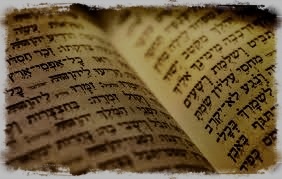
Allah Almighty revealed the Old Testament to Prophet Mūsā, peace be upon him, which contained the laws befitting the people of the time. He told of many prophets whom He – the Almighty – knew He would send. From amongst these passages is a passage of glad tidings about our most honourable Messenger in an address to Sayyiduna Mūsā, peace be upon him [1]:
“I will raise them up a Prophet from among their brethren, like unto thee, and will put my words in his mouth; and he shall speak unto them all that I shall command him. And it shall come to pass, that whosoever will not hearken unto my words which he shall speak in my name, I will require it from him. But the prophet, which shall presume to speak a word in my name, which I have not commanded him to speak, or that shall speak in the name of other gods, even that prophet shall die. And if thou say in thine heart, How shall we know the word which The Lord hath not spoken? When a prophet speaketh in the name of the Lord, if the thing follow not, nor come to pass, that is the thing which the Lord hath not spoken, but the prophet hath spoken it presumptuously: thou shalt not be afraid of him.”
The Jews claim this prophecy indicates Joshua son of Nūn the successor to Mūsā, peace be upon him; this, despite them still awaiting the arrival of another prophet in the time of the Messiah other than ‘Īsā [2]. They sent (a group of priests and Levites) to John the Baptist asking him about himself:
“They asked him, ‘Then who are you? Are you Elijah?’
He said, ‘I am not.’
‘Are you the Prophet?’
He answered, ‘No.'”
They then asked him:
“Why then do you baptise if you are not the Messiah, nor Elijah, nor the Prophet?”
This shows that the Old Testament prophesied of Elijah, the Messiah and a prophet who hadn’t appeared until the time of ‘Īsā, peace be upon him.
Furthermore, the Old Testament describes the prophet as being like Mūsā yet towards the end of the chapter of Deuteronomy we learn that there has not be been a prophet like Mūsā among the Children of Israel. The prophecy also reveals that a prophet that is presumptuous regarding God shall die. This is similar to what the Quran reveals from the Almighty:
“If he had made up any sayings and ascribed them to Us; We would have seized him by force; and then We would have cut off his life-blood.”
[Blessed Quran – al-Hāqqa – 69:44-46]
Our Prophet, peace and blessings be upon him, lived for twenty-three years amongst his fiercest enemies from polytheists and Jews, inviting them to Allah. Despite this Allah Almighty protected and comforted him, by revealing:
“…and God will protect you from people…”
[Blessed Quran – al-Māida – 5:67]
Was Allah Almighty – whilst being able of all things – incapable of punishing someone who attributed lies to Him. He is the One Who has said:
“How can they say, ‘He has invented a lie about Allah’? If Allah willed, He could seal your heart. Allah wipes out falsehood and confirms the truth with His words. He knows what the heart contains”
[Blessed Quran – ash-Shūrā – 42:24]
The prophecy also tells us of the sign which helps to recognise the truth of the prophet from his lie; that is his ability to foretell the future. The Prophet, peace and blessings be upon him, foretold of many events which occurred exactly as he prophesied. Amongst them are those that couldn’t have been calculated or guessed. Like, for example, the prophecy that the Byzantine would prevail despite the humiliating subjugation of the Persians. It was close that they would conquer Constantinople, the capital of their territory. So foretelling, at that time that the Byzantine would regain what they lost after just a few years could not be except from Allah Almighty. This is why many polytheists amongst the Quraysh were surprised by the prophecy and Abū Bakr as-Siddīq, Allah be pleased with him, chanced on this. Allah Almighty made it to pass and as-Siddīq won the wager. This is just one of many instances and details of which will be presented to you shortly, if Allah Almighty wills.
Qādī ‘Ayād reports in ash-Shifā that ‘Atā bin Yasār asked ‘Abdullah bin ‘Amar bin al-‘Āaš do describe the qualities of the Messenger of Allah, peace and blessings be upon him. He replied: “Of course! By Allah he is described in the Torah with some of his attributes in the Quran:
“O Prophet! We have sent you as a witness, and a bringer of good news and a warner.” [Blessed Quran – al-Ahzāb – 33:45]
“As protector to the uneducated, you are My slave and messenger. I have proclaimed you the representative, who is neither crude, harsh nor brash in the streets. He doesn’t avenge evil with evil, rather he pardons and forgives. Allah will not expire him until he has established a submitted nation who affirm that there is non worthy of worship except Allah, and (until) blind-eyes see, deaf-ears hear and closed-hearts open.”
A similar report is narrated by ‘Abdullah bin Salām [3], Allah be pleased with him. He was a leader of the Jews who wasn’t blinded enough by leadership to neglect the true religion; just like Ka’b the Rabi. In some versions of the tradition it says: “He is neither brash in the streets nor coarse. I will grant him everything beautiful and gift him the best of characters. Tranquility will be his cloak, virtue his ethos, God-consciousness his heart, wisdom his word, honesty and integrity his temperament, forgiveness and goodness his trait, justice his way, truth his code, guidance his promise, Islam his nation and Ahmad his name. I will through him guide after darkness, teach after ignorance, clarify after obscurity, encourage after reprehension, bless after shortage, enrich after poverty and unify after prejudice. I will bring together through him, differing hearts, diverging desires and broken communities. I will make his nation the best of nations.”
The Blessed Prophet, peace and blessings be upon him, told of his own qualities mentioned in the Torah: “He is the honest and trustworthy one – My slave, the chosen one, whose birthplace is Makkah, whose migration is to Madinah – or he said Tayba – and his nation are the praisers of Allah Almighty in every circumstance.
1. Deuteronomy 18:18-22
2. Gospel of John – Chapter 1, verse 21 & 24.
3. His name prior to converting to Islam was al-Hašīn. The Prophet, peace and blessings be upon him, promised him Paradise.

 Beacon of Certainty